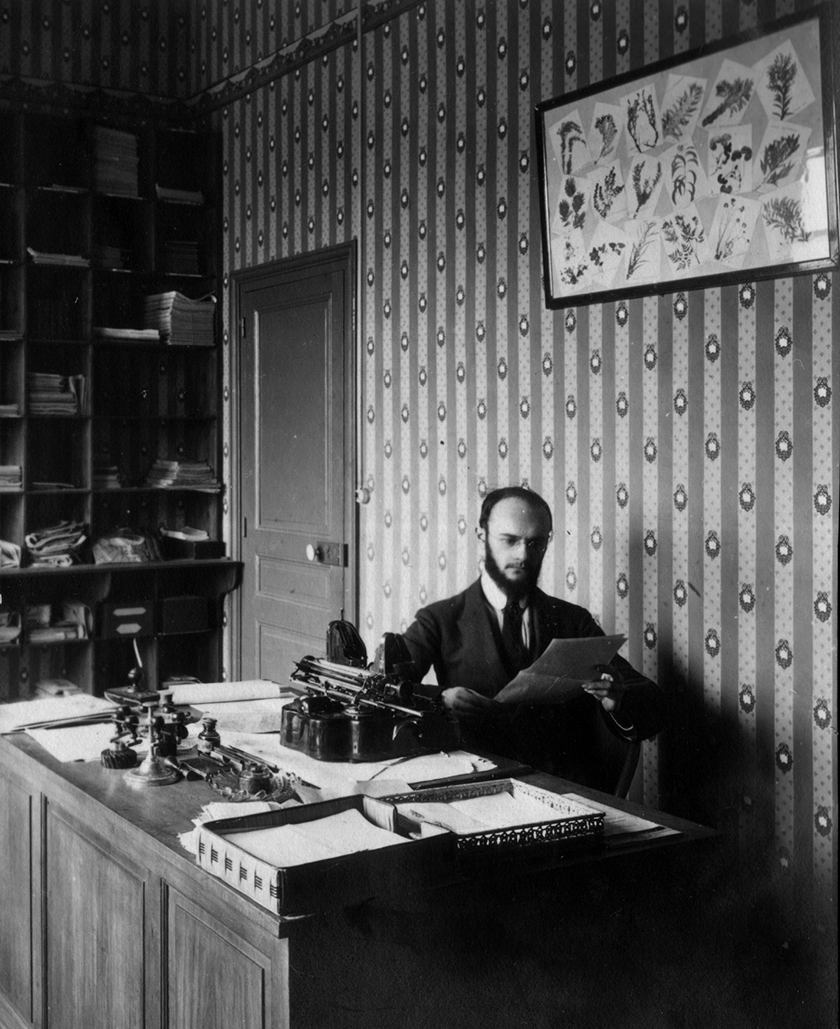
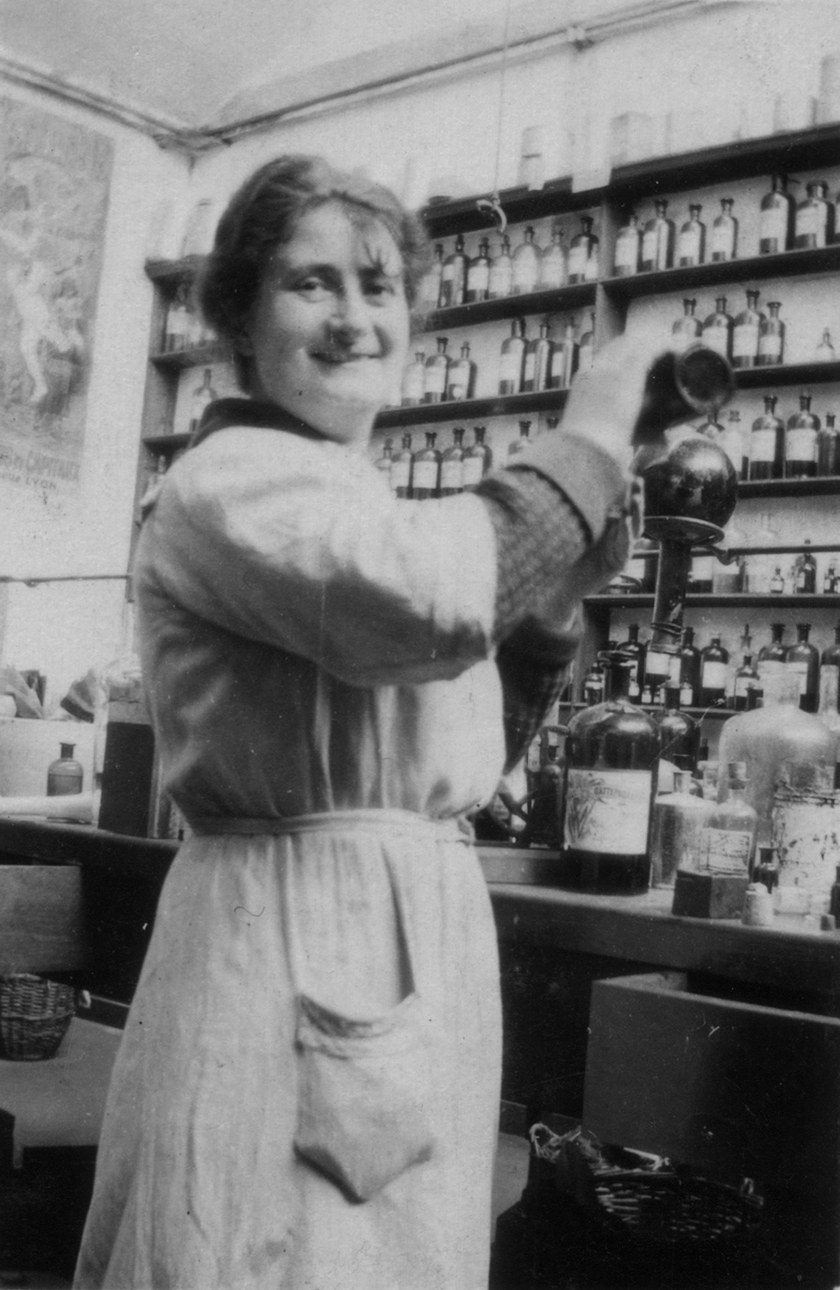
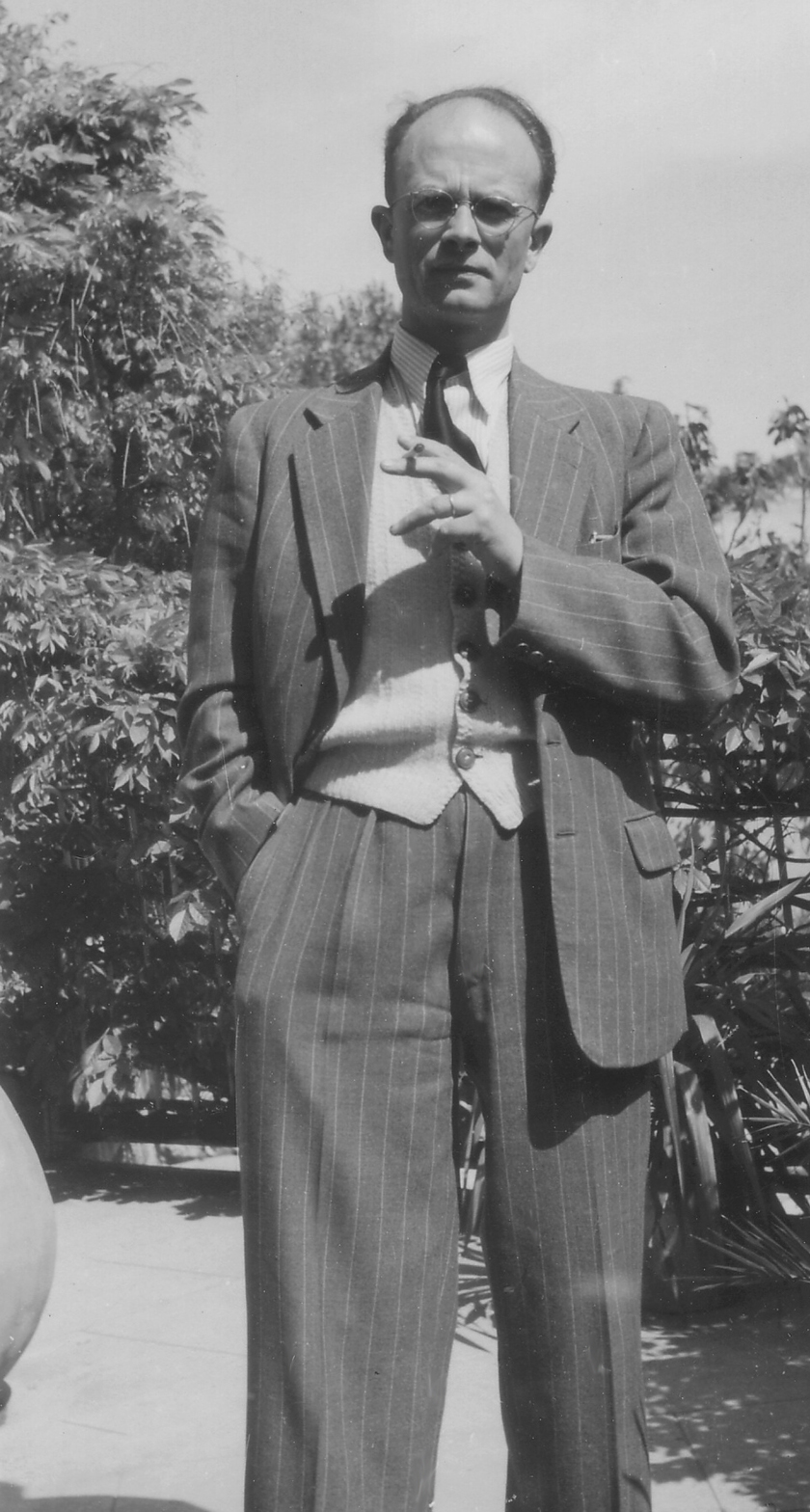
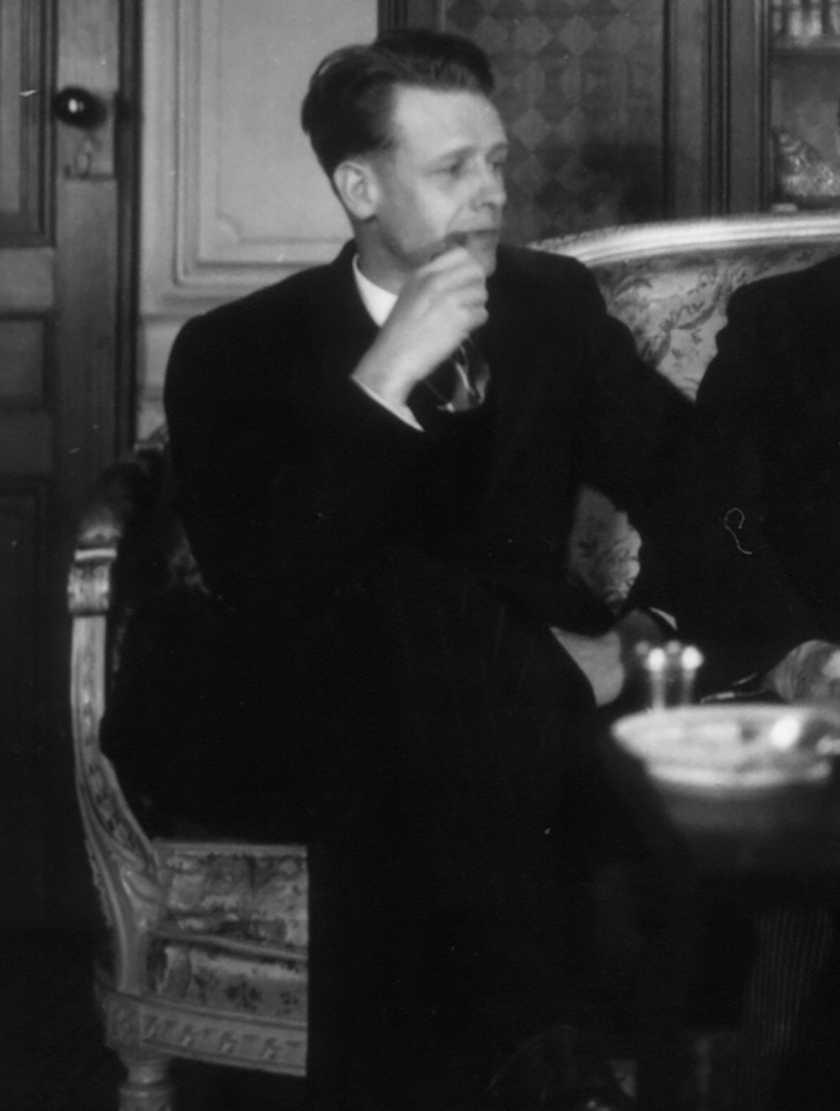
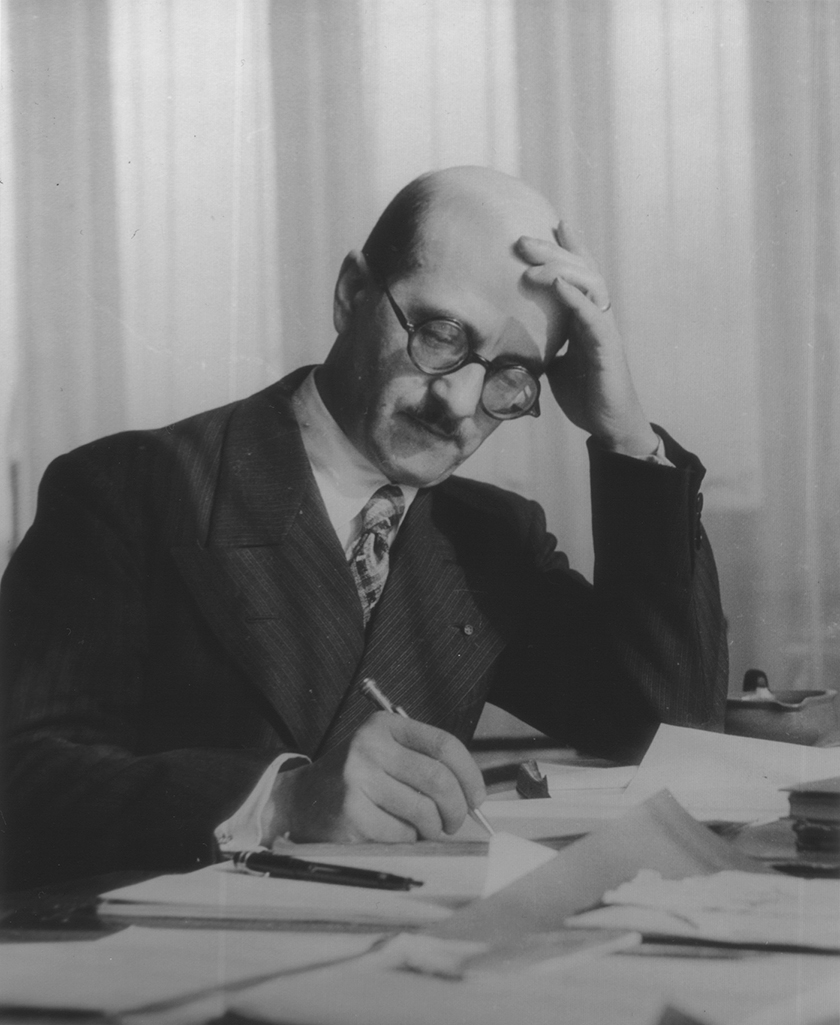
René-Maurice Gattefossé, Louis’ son, was a chemical engineer and the company’s head throughout the first half of the 20th century. As inventive as he was curious, he led the company into the perfume, cosmetic, and pharmaceutical industries. He devoted the majority of his life to studying the chemistry of aromatic compounds and to aromatherapy, which he invented.
In January 1907, Abel and René-Maurice created “Gattefossé & Fils” (Gattefossé & Sons), and the family business was legally recognized as a French company for the very first time. Both sons continued their father’s work (Louis (lien)), with Abel running the commercial side of the business and René-Maurice in charge of research. René-Maurice was keen to let his clients know about the use of synthetic fragrances (new to the market and often criticized), and he published several very successful books.
René-Maurice was also interested in “natural” raw materials, especially essential oils. In 1907, the President of the South-East Agricultural Trade Union wanted to raise the profile of French lavender and invited René- Maurice to Haute Provence to see the “baïassières”, the region’s vast wild lavender fields. There, René-Maurice discovered a piece of unclaimed land and also met lavender growers working in basic conditions. He soon put initiatives in place to improve product quality, increase yield, modernize equipment, educate producers and organize the profession to make it more effective. He made sure that the stills functioned more efficiently, filed for a patent, contributed to creating a trade union for lavender essence producers, purchased a steam distillation plant, set up a cooperative for lavender growers and lots more.
Inspired by the success of his investment in Provençal lavender, in 1908, René-Maurice launched La Parfumerie Moderne, a trade magazine targeted at perfumers, essence producers, engineers and agronomists. La Parfumerie Moderne may have promoted the interests of the whole sector, but it also functioned as an indirect communication tool for the Gattefossé business.
At the outbreak of the First World War, the three Gattefossé brothers – Abel, René-Maurice and Robert, Louis’s third son, were all enlisted. Of the three, only René-Maurice would survive. In 1915, René-Maurice was wounded and returned to the business, throwing heart and soul into promoting essential oils, which he believed could save lives at a time so tainted by death. brothers – Abel, René-Maurice and Robert, Louis’s third son, were all enlisted. Of the three, only René-Maurice would survive. In 1915, René-Maurice was wounded and returned to the business, throwing heart and soul into promoting essential oils, which he believed could save lives at a time so tainted by death.
It was in 1910 that René-Maurice personally experimented with the antiseptic properties and healing qualities of lavender essential oil. After an explosion in his laboratory, René-Maurice developed gas gangrene on both hands and decided to apply lavender essence to the infected wounds. They healed, so he started to study this new “therapy”. In 1916, he developed Salvol, an “aromatic disinfectant” that would go on to be trialed in hospitals, first with soldiers, then civilians during the Spanish flu pandemic of 1918. Now he had the support of medics, René-Maurice was keen to prove the benefits of using terpene-free essences which, according to him, were more soluble in water than untreated oils. This marked a significant step forward in the history of aromatherapy.
During the 1930s, René-Maurice was experimenting with the therapeutic effects of essential oils in the syphilis department run by Professor Jean Gaté at the Antiquaille hospital in Lyon. He was also using his son in-law’s emulsified excipients in his preparations. At that time, René-Maurice had not long published a book entitled L’Aromathérapie, a term he invented. The publication included a report on the work he had carried out over the previous two decades and analysis of scientific, chemical and pharmacological data available on aromatherapy. Towards the end of the 1930s, he conducted an increasing number of clinical trials, looking ahead to a second edition. However, it never saw the light of day.
In 1940, René-Maurice purchased a farmhouse near Saint-Rémy-de-Provence (in the South of France), where he grew lavender, mint, sage and other aromatic herbs. He also found this to be a suitable environment for writing numerous works on cosmetics.
On 21st April 1950, René-Maurice was visiting his brother Jean (lien) in Casablanca, Morocco, when he died, suddenly, from a pulmonary edema.